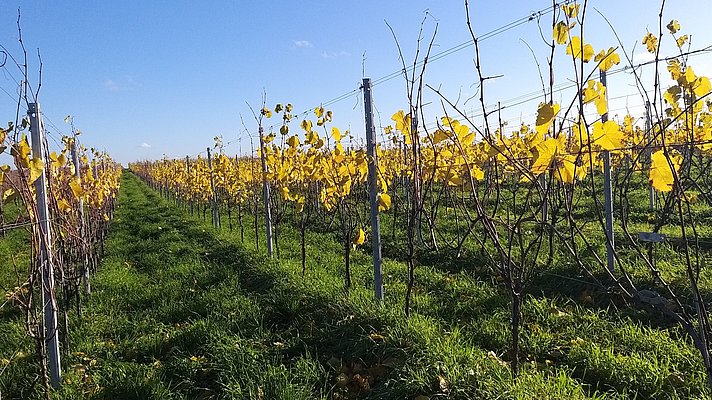
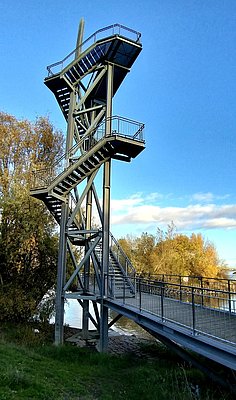
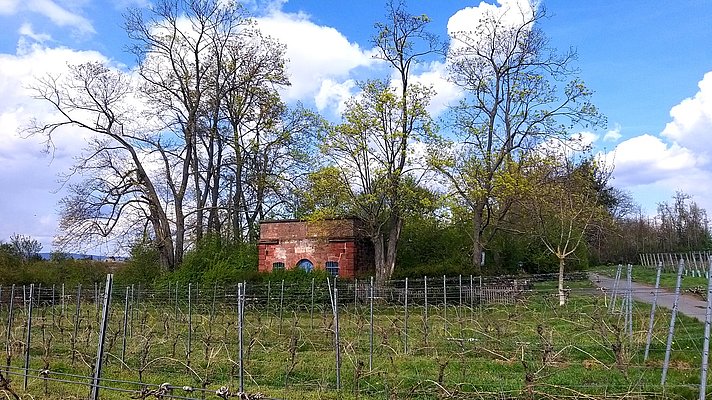
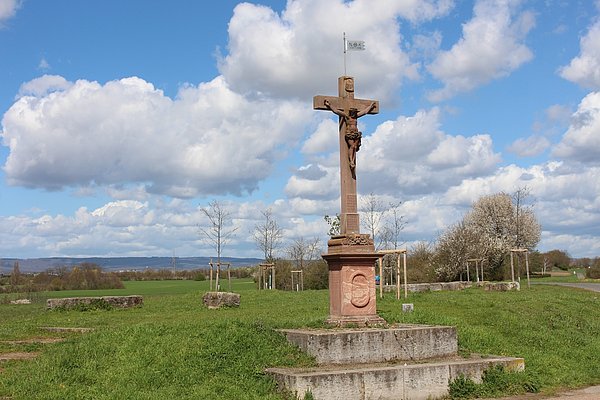
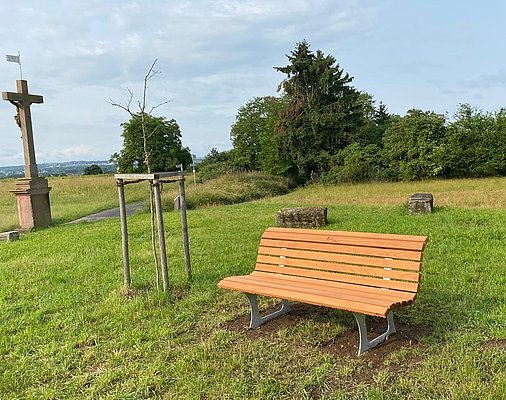
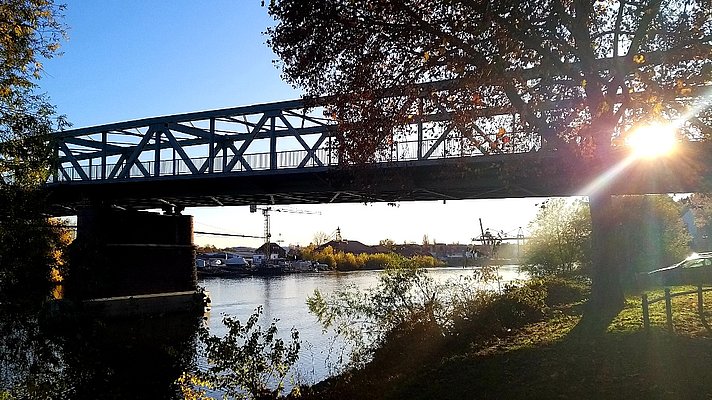
The journey starts through the Flößerpark, over the Schneckenbrücke to the outskirts into the vineyards. The Fähncheskreuz lies on a hill and offers distant views to the large Feldberg in the Taunus and to the Donnersberg in the Palatinate. The weather vane above the Jesus figure gave the field cross on the historic Steinernes Straßen its name. Juicy meadows, horse paddocks and greened vineyards shape the landscape along the path to the Main. Along the open floodplain landscape, the path leads back to the wine tasting stand at Franz-Henz-Platz.
Loess shapes the soil in the Rheingau like no other substrate. The light, fine-grained sediment is dust from the ice ages, when glaciers ground rocks into rock flour. Winds blew the fine mineral grains to these latitudes and formed meter-thick loess deposits. Various properties make the loess soil so valuable. It is an immense water reservoir, rich in lime, offers ample root space, and holds a rich mineral reserve.
The vineyard site St. Kilianberg goes back to the patron saint of the Franconian timber rafters. They built the small rafts at the mouth of the Main into large units for timber transport on the Rhine and settled here.